| DETROIT TRANSIT HISTORY |

THE PRE-D.S.R. YEARS - Part IV
| THE MUNICIPAL TAKE-0VER OF THE CITY LINES (1921--1922) |
Not long after Hazen S. Pingree entered the office of Mayor of Detroit in 1890, the owners of
the city's streetcar companies found themselves entangled in a long and on-going battle with
City Hall that would last for nearly thirty years. Although most of the smaller battles along the
way had been won by the streetcar companies, the final chapter of that thirty-year war was
about to be written.
the city's streetcar companies found themselves entangled in a long and on-going battle with
City Hall that would last for nearly thirty years. Although most of the smaller battles along the
way had been won by the streetcar companies, the final chapter of that thirty-year war was
about to be written.
In 1918, a former Canadian, industrialist, banker, and philanthropist named
James J. Couzens decided to run for Mayor of Detroit under a platform that
advocated the acquisition of the DUR. Couzens (or 'Big Jim' as he was
called) had been one of the initial associates of Henry Ford, and was involved
in the founding of the Ford Motor Company. He later became vice president
and general manager of that company. Couzens later served as one of the
original appointees to the Detroit Street Railway Commission, serving from
1913 to 1916. While on the
James J. Couzens decided to run for Mayor of Detroit under a platform that
advocated the acquisition of the DUR. Couzens (or 'Big Jim' as he was
called) had been one of the initial associates of Henry Ford, and was involved
in the founding of the Ford Motor Company. He later became vice president
and general manager of that company. Couzens later served as one of the
original appointees to the Detroit Street Railway Commission, serving from
1913 to 1916. While on the

| JAMES J. COUZENS |
Commission he became a big advocate of the city take-over of the streetcar system, and even
considered himself an expert on transportation.
According to the C.E.R.A. publication, Detroit's Street Railways, Vol I: City Lines
1863-1922, that during his campaign for mayor in 1918, Jim Couzens had himself removed
from a DUR streetcar by refusing to pay the new 6¢ fare, which the DUR had just raised by
one penny. Couzens arranged for the press to be there, which gave the publicity stunt full
coverage in the newspapers. Evidently, Detroiters liked what they saw in Couzens and his
platform, and elected him Mayor of Detroit. He entered office in January of 1919.
Meanwhile, Couzens wasted no time in getting an offer on the ballot for the city to purchase
the DUR for $31.5 million. But the large financing requirements needed to obtain the funding
resulted in Mayor Couzens' first ballot proposal attempt being defeated by the voters in April
1919.
Meanwhile, back in December of 1917, and prior to Couzens' election as mayor, the second
of two Detroit Rapid Transit engineering studies had been completed. This second report,
prepared by a consulting firm hired by the D.S.R. Commission, had recommended that a
total of 65 miles of combined underground downtown subways with surface or elevated rail
lines further out in the city, should be built to relieve downtown traffic congestion.
The consultants recommended that the city should finance and build the system, and regulate
the fares, while the privately-owned DUR Company would operate it. The money generated
by the system would be equally divided between the city and the DUR, with the city's share
being used to pay off the debt. Eventually, the city could use its share to later acquire the
DUR. The study concluded that any outright purchase of the DUR at that time would make it
impossible for the city to also be able to finance the building of a rapid transit system.
The plan met the approval of the DSR Commission, and in October 1919 was finally
submitted to the Detroit Common Council. Although the Council was divided on the issue,
they decided to pass a resolution to begin negotiations with the DUR to put this city-company
arrangement plan into operation. Of course, Mayor Couzens, who had campaigned on a
platform calling for the elimination of the DUR, vetoed it. The Council attempted to override
the Mayor's veto, but failed by one vote. That single vote may have prevented Detroit from
having a subway built as early as the 1920's.
Shortly after vetoing the subway plan, the Mayor presented a newly revised plan to the
voters. Instead of an immediate take-over of the DUR, Couzens now proposed building a
competing municipal street railway operation to run the company out of business. He asked
Detroiters to grant him $15 million in bonds to help build 100 miles of new track, and
purchase 400 new streetcars and 150 trailer cars. The bonds would also cover $1 million for
carbarns and other equipment, $1.3 million to purchase 29.5 miles of trackage built since
1911 under the "Day-to-Day" service agreements, and $850,000 to take-over 21.25 miles of
track where the franchise rights had already expired. This included the former Detroit City
Railway's original Woodward line tracks from Milwaukee to the Detroit River, which expired
in 1909.
Jim Couzens worked hard to get his new plan approved. He began using the slogan
"Service-at-Once" as a sales pitch -- a play on the "Detroit-Service-at-Cost-Plan" motto
used to pitch the subway plan he vetoed. An extensive campaign was waged, including the
production of a professionally-made motion picture to be shown at the neighborhood theaters.
The local newspapers (who backed the Mayor and his plan) ran daily listings of where this
film would be shown, and also ran anti-DUR news articles, editorials, cartoons and letters to
help gain voter support.
On April 5, 1920, Detroit voters approved Mayor Couzens' $15,000,000 bond issue proposal
to build and operate a separate municipally-owned street railway system. Within 24-hours, the
Mayor held a press conference where he would turn over the first shovel of dirt, which
signaled the beginning of construction on "Big Jim's City Streetcar System."
considered himself an expert on transportation.
According to the C.E.R.A. publication, Detroit's Street Railways, Vol I: City Lines
1863-1922, that during his campaign for mayor in 1918, Jim Couzens had himself removed
from a DUR streetcar by refusing to pay the new 6¢ fare, which the DUR had just raised by
one penny. Couzens arranged for the press to be there, which gave the publicity stunt full
coverage in the newspapers. Evidently, Detroiters liked what they saw in Couzens and his
platform, and elected him Mayor of Detroit. He entered office in January of 1919.
Meanwhile, Couzens wasted no time in getting an offer on the ballot for the city to purchase
the DUR for $31.5 million. But the large financing requirements needed to obtain the funding
resulted in Mayor Couzens' first ballot proposal attempt being defeated by the voters in April
1919.
Meanwhile, back in December of 1917, and prior to Couzens' election as mayor, the second
of two Detroit Rapid Transit engineering studies had been completed. This second report,
prepared by a consulting firm hired by the D.S.R. Commission, had recommended that a
total of 65 miles of combined underground downtown subways with surface or elevated rail
lines further out in the city, should be built to relieve downtown traffic congestion.
The consultants recommended that the city should finance and build the system, and regulate
the fares, while the privately-owned DUR Company would operate it. The money generated
by the system would be equally divided between the city and the DUR, with the city's share
being used to pay off the debt. Eventually, the city could use its share to later acquire the
DUR. The study concluded that any outright purchase of the DUR at that time would make it
impossible for the city to also be able to finance the building of a rapid transit system.
The plan met the approval of the DSR Commission, and in October 1919 was finally
submitted to the Detroit Common Council. Although the Council was divided on the issue,
they decided to pass a resolution to begin negotiations with the DUR to put this city-company
arrangement plan into operation. Of course, Mayor Couzens, who had campaigned on a
platform calling for the elimination of the DUR, vetoed it. The Council attempted to override
the Mayor's veto, but failed by one vote. That single vote may have prevented Detroit from
having a subway built as early as the 1920's.
Shortly after vetoing the subway plan, the Mayor presented a newly revised plan to the
voters. Instead of an immediate take-over of the DUR, Couzens now proposed building a
competing municipal street railway operation to run the company out of business. He asked
Detroiters to grant him $15 million in bonds to help build 100 miles of new track, and
purchase 400 new streetcars and 150 trailer cars. The bonds would also cover $1 million for
carbarns and other equipment, $1.3 million to purchase 29.5 miles of trackage built since
1911 under the "Day-to-Day" service agreements, and $850,000 to take-over 21.25 miles of
track where the franchise rights had already expired. This included the former Detroit City
Railway's original Woodward line tracks from Milwaukee to the Detroit River, which expired
in 1909.
Jim Couzens worked hard to get his new plan approved. He began using the slogan
"Service-at-Once" as a sales pitch -- a play on the "Detroit-Service-at-Cost-Plan" motto
used to pitch the subway plan he vetoed. An extensive campaign was waged, including the
production of a professionally-made motion picture to be shown at the neighborhood theaters.
The local newspapers (who backed the Mayor and his plan) ran daily listings of where this
film would be shown, and also ran anti-DUR news articles, editorials, cartoons and letters to
help gain voter support.
On April 5, 1920, Detroit voters approved Mayor Couzens' $15,000,000 bond issue proposal
to build and operate a separate municipally-owned street railway system. Within 24-hours, the
Mayor held a press conference where he would turn over the first shovel of dirt, which
signaled the beginning of construction on "Big Jim's City Streetcar System."
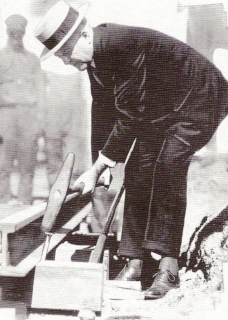
Construction of the tracks began almost immediately, with the
excess material that had been taken from the streets to form
the track base hauled away to Belle Isle and used to enlarge
the Island. On August 23rd, "Big Jim" himself would be
photographed driving that first spike into rails along Harper
Avenue.
Meanwhile, land was purchased on the city's east-side on a
site bounded by Shoemaker, Lillibridge, E. Warren and St.
Jean. This farmland, formerly a part of the recently annexed
Village of St. Clair Heights, would be the site of the
department's administration offices, and would also be used
to house the city's streetcar fleet.
excess material that had been taken from the streets to form
the track base hauled away to Belle Isle and used to enlarge
the Island. On August 23rd, "Big Jim" himself would be
photographed driving that first spike into rails along Harper
Avenue.
Meanwhile, land was purchased on the city's east-side on a
site bounded by Shoemaker, Lillibridge, E. Warren and St.
Jean. This farmland, formerly a part of the recently annexed
Village of St. Clair Heights, would be the site of the
department's administration offices, and would also be used
to house the city's streetcar fleet.
On February 1, 1921, with only two lines totaling 13 miles, and a fleet of sixteen cars in
service, the City of Detroit began operating a small competing street railway operation. The
fare was 5¢ with a free transfer being issued between the two lines. Although the city's fleet of
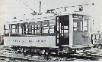
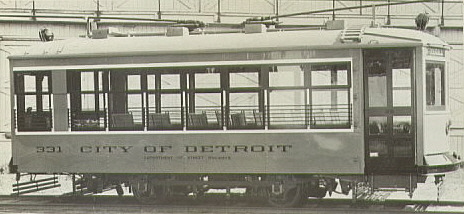
cars -- painted yellow with maroon and white stripping -- displayed the wording "City of
Detroit-Department of Street Railways" across the sides, this municipally-owned
operation was structured differently than the actual D.S.R. agency which was formed later.
This city system more resembled the city's current DDOT operation, in that it existed as a city
department, much like Public Works and Parks & Recreation. To help avoid any confusion,
most historians tend to refer to the city's first attempt at public transit as the "Municipal
Operation" or the M.O., instead of the DSR.
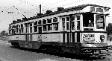
The original cars operated by the "Municipal Operation" were a fleet of 250 small size
single-truck Birney Safety Cars, which were nothing like the large streetcars with trailers the
public had expected. These cars were too small, too slow, unstable on the tracks, and unable
to handle large city crowds. The MO operated primarily out of a hastily built yard and
maintenance shed, located at the Shoemaker and St. Jean location. A permanent brick
structure -- the Shoemaker Carhouse -- was also in the process of being built, and would
later open on July 4, 1922. The operation's administration offices were also built on the same
site -- located between St. Jean and Lillibridge -- at 11200 Shoemaker Avenue. In addition,
temporary carhouses were also used on the west-side to house cars for the system's
Clairmount line.
The first two MO lines to begin operations included a "Crosstown" line built along Buchanan
and Charlevoix streets, and a much shorter line along St. Jean. Actually, the original St. Jean
Avenue line was built in order to provide the MO streetcars the trackage needed to reach
Charlevoix Avenue from its Shoemaker Yard. The St. Jean line operated with six cars from
St. Jean & Kercheval to Montclair & Harper. Only eight miles of the Charlevoix-Buchanan
"Crosstown" line -- operating with ten cars along Charlevoix between Alter Road and
Bellevue (just west of E. Grand Blvd.) -- was ready for service that first day. But by August,
the entire line to Buchanan & Junction on the west-side had been completed.
By the end of 1921, the operation had built 52.6 miles of new trackage, allowing the MO to
begin operations on the following lines: Charlevoix-Buchanan "Crosstown", St. Jean
Avenue [from Kercheval to Harper & Gratiot], Moran-McDougall, Van Dyke [from
Charlevoix to Harper], Clairmount [from Colby & Russell (just north of the current I-75 and E.
Grand Blvd.) to Joy Rd. & Gd. River], Fenkell [from 12th & Davison to Fenkell & Livernois],
and Davison [from Oakman (present-day Woodrow Wilson) to Livernois].
But the city system would soon realize that without access into the downtown area its
operation could not compete against the DUR. After a ballot approval by voters on April 4,
1921, the city was able to purchase 29½ miles of newer trackage built by the DUR since 1911
under a "Day-to-Day" permit agreement -- which also gave the city the rights to purchase
those tracks at any time. This take-over would seize portions of the DUR's heavily traveled
Grand Belt, Hamilton, Mack and Third St. lines. The lines, along with 105 cars and 23
trailers were purchased for $2.3 million.
Attempts were made by the DUR in court to challenge the Municipal Ownership Ordinance,
but were unsuccessful. After turning down the trivial offer of $338,000 from the city to
purchase portions of its Woodward and Fort Street lines -- where the franchise rights had
expired -- the DUR threatened to pull up the tracks along those lines. But after loud protests
from downtown businesses the DUR withdrew its threats.
But another blow to the DUR would come in November 1921, when Detroit voters approved
an ordinance which would allow the city to force the DUR to remove their tracks on any line
whenever its service franchise agreement expired. Realizing the impending loss of its main
Woodward line, and with an additional 54.6 miles of franchise trackage due to expire in 1924,
the DUR reached an agreement with the MO to begin joint service on four major lines. Joint
service began on the Trumbull line on December 15, 1921, and was later extended to the
Hamilton, Woodward, and the East and West Fort lines in January 1922. Each system
agreed to pay 20¢ per car mile for operating over the other system's rails. The MO was also
allowed to store its cars in DUR carhouses for $5.00 a day. The city also agreed to purchase
a fleet of fifty large double-truck Peter Witt streetcars to operate on DUR heavy lines.
By early 1922, the MO had built nearly 61½ miles of track and had also taken over 29½ miles
of DUR trackage. With the city-owned system now slowly expanding, the future prospect for
extensions and other much needed DUR improvements looked dim. Finally the Canadian
investors who controlled the DUR decided to give up and sell out to the city. On March 13,
1922, a price of $19,850,000 was agreed upon. On April 17, 1922, the purchase was
approved by Detroit voters along with a $4 million bond issue to cover debts. The "Thirty
Years War" for municipal ownership was now over.
On May 15, 1922, at 12:01AM, the DEPARTMENT OF STREET RAILWAYS (also known as
the D.S.R.) began its first day of operation. The newly formed municipally owned and
operated transportation agency would absorb the smaller M.O. system, and take over all DUR
railway operations within Detroit, Hamtramck, Highland Park and Springwells (now known as
Dearborn). The City of Detroit now became the first large American city to provide an
alternative to privately owned mass transportation through municipal ownership.
The DSR now controlled practically all of the street railway trackage inside the then Detroit
city limits; controlled some 363 miles of track, employed 4,000 workers, and operated 1,457
streetcars out of 12 carhouses. Thirty acres of the DUR's Highland Park Woodward Avenue
property -- located north of Manchester between Woodward and Third -- also became the
property of the DSR, serving as a storage garage and major maintenance facility for the DSR
through the early 1970's.
Although the Detroit United Railway had now lost its city street railway operation, the DUR
continued to operate its extensive interurban operation through the early 1930's. The DUR
retained a portion of the Highland Park facility, between Third and Hamilton, to house its
interurban operation.
service, the City of Detroit began operating a small competing street railway operation. The
fare was 5¢ with a free transfer being issued between the two lines. Although the city's fleet of
cars -- painted yellow with maroon and white stripping -- displayed the wording "City of
Detroit-Department of Street Railways" across the sides, this municipally-owned
operation was structured differently than the actual D.S.R. agency which was formed later.
This city system more resembled the city's current DDOT operation, in that it existed as a city
department, much like Public Works and Parks & Recreation. To help avoid any confusion,
most historians tend to refer to the city's first attempt at public transit as the "Municipal
Operation" or the M.O., instead of the DSR.
The original cars operated by the "Municipal Operation" were a fleet of 250 small size
single-truck Birney Safety Cars, which were nothing like the large streetcars with trailers the
public had expected. These cars were too small, too slow, unstable on the tracks, and unable
to handle large city crowds. The MO operated primarily out of a hastily built yard and
maintenance shed, located at the Shoemaker and St. Jean location. A permanent brick
structure -- the Shoemaker Carhouse -- was also in the process of being built, and would
later open on July 4, 1922. The operation's administration offices were also built on the same
site -- located between St. Jean and Lillibridge -- at 11200 Shoemaker Avenue. In addition,
temporary carhouses were also used on the west-side to house cars for the system's
Clairmount line.
The first two MO lines to begin operations included a "Crosstown" line built along Buchanan
and Charlevoix streets, and a much shorter line along St. Jean. Actually, the original St. Jean
Avenue line was built in order to provide the MO streetcars the trackage needed to reach
Charlevoix Avenue from its Shoemaker Yard. The St. Jean line operated with six cars from
St. Jean & Kercheval to Montclair & Harper. Only eight miles of the Charlevoix-Buchanan
"Crosstown" line -- operating with ten cars along Charlevoix between Alter Road and
Bellevue (just west of E. Grand Blvd.) -- was ready for service that first day. But by August,
the entire line to Buchanan & Junction on the west-side had been completed.
By the end of 1921, the operation had built 52.6 miles of new trackage, allowing the MO to
begin operations on the following lines: Charlevoix-Buchanan "Crosstown", St. Jean
Avenue [from Kercheval to Harper & Gratiot], Moran-McDougall, Van Dyke [from
Charlevoix to Harper], Clairmount [from Colby & Russell (just north of the current I-75 and E.
Grand Blvd.) to Joy Rd. & Gd. River], Fenkell [from 12th & Davison to Fenkell & Livernois],
and Davison [from Oakman (present-day Woodrow Wilson) to Livernois].
But the city system would soon realize that without access into the downtown area its
operation could not compete against the DUR. After a ballot approval by voters on April 4,
1921, the city was able to purchase 29½ miles of newer trackage built by the DUR since 1911
under a "Day-to-Day" permit agreement -- which also gave the city the rights to purchase
those tracks at any time. This take-over would seize portions of the DUR's heavily traveled
Grand Belt, Hamilton, Mack and Third St. lines. The lines, along with 105 cars and 23
trailers were purchased for $2.3 million.
Attempts were made by the DUR in court to challenge the Municipal Ownership Ordinance,
but were unsuccessful. After turning down the trivial offer of $338,000 from the city to
purchase portions of its Woodward and Fort Street lines -- where the franchise rights had
expired -- the DUR threatened to pull up the tracks along those lines. But after loud protests
from downtown businesses the DUR withdrew its threats.
But another blow to the DUR would come in November 1921, when Detroit voters approved
an ordinance which would allow the city to force the DUR to remove their tracks on any line
whenever its service franchise agreement expired. Realizing the impending loss of its main
Woodward line, and with an additional 54.6 miles of franchise trackage due to expire in 1924,
the DUR reached an agreement with the MO to begin joint service on four major lines. Joint
service began on the Trumbull line on December 15, 1921, and was later extended to the
Hamilton, Woodward, and the East and West Fort lines in January 1922. Each system
agreed to pay 20¢ per car mile for operating over the other system's rails. The MO was also
allowed to store its cars in DUR carhouses for $5.00 a day. The city also agreed to purchase
a fleet of fifty large double-truck Peter Witt streetcars to operate on DUR heavy lines.
By early 1922, the MO had built nearly 61½ miles of track and had also taken over 29½ miles
of DUR trackage. With the city-owned system now slowly expanding, the future prospect for
extensions and other much needed DUR improvements looked dim. Finally the Canadian
investors who controlled the DUR decided to give up and sell out to the city. On March 13,
1922, a price of $19,850,000 was agreed upon. On April 17, 1922, the purchase was
approved by Detroit voters along with a $4 million bond issue to cover debts. The "Thirty
Years War" for municipal ownership was now over.
On May 15, 1922, at 12:01AM, the DEPARTMENT OF STREET RAILWAYS (also known as
the D.S.R.) began its first day of operation. The newly formed municipally owned and
operated transportation agency would absorb the smaller M.O. system, and take over all DUR
railway operations within Detroit, Hamtramck, Highland Park and Springwells (now known as
Dearborn). The City of Detroit now became the first large American city to provide an
alternative to privately owned mass transportation through municipal ownership.
The DSR now controlled practically all of the street railway trackage inside the then Detroit
city limits; controlled some 363 miles of track, employed 4,000 workers, and operated 1,457
streetcars out of 12 carhouses. Thirty acres of the DUR's Highland Park Woodward Avenue
property -- located north of Manchester between Woodward and Third -- also became the
property of the DSR, serving as a storage garage and major maintenance facility for the DSR
through the early 1970's.
Although the Detroit United Railway had now lost its city street railway operation, the DUR
continued to operate its extensive interurban operation through the early 1930's. The DUR
retained a portion of the Highland Park facility, between Third and Hamilton, to house its
interurban operation.
| |||||||||||||||||||||||||||||||||||||||


(Click on above thumbnail photos to view larger image)
-Streetcar photos courtesy of S. Sycko
The above information was compiled from information acquired from the Central Electric Railfans' Association publication Detroit's Street
Railways Vol.I (1863-1922) and Vol. II (1922-1956); miscellaneous Jack E. Schramm historical DSR articles published by Motor Coach
Age magazine; and other numerous publications and online sources.
Railways Vol.I (1863-1922) and Vol. II (1922-1956); miscellaneous Jack E. Schramm historical DSR articles published by Motor Coach
Age magazine; and other numerous publications and online sources.
| For additional info on the early DSR years, see upcoming articles to be located under "The DSR Years" |
For Comments and/or Suggestions, Please contact Site Owner at: admin@detroittransithistory.info
| DETROIT TRANSIT HISTORY |
 | |  | |  | |  | |  |
| | | | | | | | |
- a DSR Files photo

| The web-site which takes a look back at the history of public transportation in and around the City of Detroit. |